Vous en avez assez du manque d'espace en entrepôt et de la lenteur de la manutention des palettes ? Le système de rayonnage push-back utilise des rails inclinés et des chariots à gravité emboîtés, comme illustré sur le schéma 3D. Il s'agit d'un système de stockage LIFO mécanique où le chargement et le déchargement s'effectuent par l'allée avant. Fonctionnant sans électricité, il offre un excellent compromis entre densité de stockage, efficacité de préparation de commandes et sécurité. Ce système est largement utilisé dans les entrepôts frigorifiques, la production industrielle, l'industrie automobile et la logistique 3PL.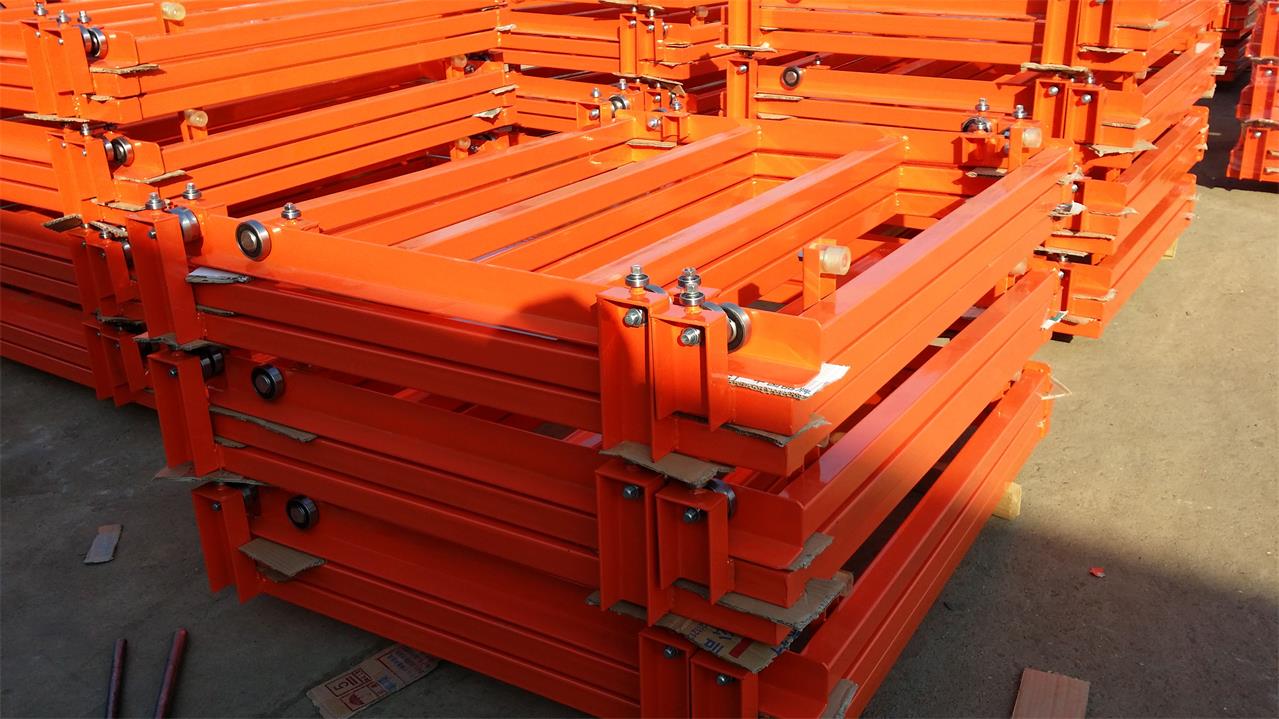
1. Structure de rayonnage à accumulation
Le système complet comprend des châssis de rack principaux bleus et des ensembles de chariots à gravité orange.
Les montants sont dotés de trous de réglage et de renforts diagonaux pour plus de stabilité, avec des protections de colonne avant en option pour éviter les dommages causés par les chariots élévateurs.
Le principal atout réside dans ses chariots emboîtés et superposés, installés sur des rails en acier inclinés, pouvant accueillir de 2 à 6 palettes par voie. Fabriqués en acier soudé épais avec des rouleaux résistants à l'usure, chaque voie dispose d'un groupe de chariots indépendant pour le stockage séparé des références, et ne comporte aucune pièce électronique pour une maintenance simplifiée.
2. Fonctionnement du système de chariots
Lors du chargement, le chariot élévateur reste dans l'allée extérieure et repousse les chariots à mesure que de nouvelles palettes sont empilées.
Lors du déchargement, la gravité fait glisser automatiquement toutes les palettes restantes vers l'avant après le retrait de la palette de tête. Le système applique une rotation stricte des stocks selon le principe du dernier entré, premier sorti (LIFO) pour les produits en lots.
3. Principaux avantages
Capacité de stockage accrue : grâce à la suppression des allées redondantes, il crée 50 % à 80 % d’emplacements de palettes supplémentaires par rapport aux rayonnages sélectifs standard, tout en assurant une préparation de commandes beaucoup plus rapide qu’avec les rayonnages à accumulation.
Moins de dommages et une utilisation plus sûre : les chariots élévateurs ne circulent jamais à l’intérieur de la structure des rayonnages, ce qui réduit considérablement les risques de collision. Les butées de palettes intégrées empêchent le déplacement des charges et diminuent les coûts de réparation à long terme.
Grande adaptabilité environnementale : la structure entièrement en acier du chariot fonctionne de manière fiable des chambres froides à -30 °C aux entrepôts industriels classiques. Des finitions galvanisées sont disponibles pour les environnements humides ou côtiers.
Adapté à plusieurs références : des chariots indépendants par voie permettent de gérer des lots de produits distincts, ce qui est beaucoup plus polyvalent qu'un rayonnage à accumulation qui ne peut accueillir qu'un seul produit en vrac par voie.
Faible entretien : seule une lubrification occasionnelle des rouleaux est nécessaire, avec une durée de vie supérieure à 15 ans en utilisation régulière.
4. Secteurs d'activité appropriés
Entrepôts frigorifiques et congélateurs : moins d’allées réduisent les pertes d’air froid, et les chariots fonctionnent bien à des températures inférieures à zéro.
Distribution de produits alimentaires et de boissons : La préparation rapide des commandes accélère l'expédition en masse des produits en conserve et en bouteille.
Usines de pièces automobiles : Stockage par lots de composants avec un minimum de dommages aux rayonnages et aux marchandises.
Fournisseurs en gros et prestataires logistiques : équilibrent les volumes de stockage élevés et la classification multiproduits.
Fabrication générale : Idéal pour les produits finis fabriqués par lots avec un rythme de production régulier.
5. Normes de conformité mondiales
Les rayonnages à accumulation dynamique Kingmore sont conformes aux normes industrielles internationales pour l'exportation : EN 15512 et FEM pour l'Europe, ANSI MH16.1/RMI pour l'Amérique du Nord, et spécifications de sécurité NBR ainsi que plans métriques pour le Brésil et l'Amérique latine. Nous fournissons des plans d'aménagement personnalisés, des rapports de calcul de charge et des certificats de test antirouille pour les appels d'offres.
6. Qui devrait choisir les rayonnages à chariots push-back ?
Ce système de chariots à gravité est parfaitement adapté si vous manquez d'espace au sol dans votre entrepôt, si vous stockez des marchandises par lots LIFO, si vous gérez un entrepôt frigorifique, si vous souhaitez réduire les pertes dues aux collisions ou si vous gérez plusieurs gammes de produits à volume moyen.
Conclusion
Le rayonnage à chariots push-back remédie aux inconvénients liés à la faible densité des rayonnages sélectifs et aux risques pour la sécurité des rayonnages à accumulation. Sa conception purement mécanique, basée sur la gravité, garantit des retours sur investissement stables et durables aux exploitants d'entrepôts du monde entier.
Contactez l'équipe d'ingénierie de Kingmore pour obtenir gratuitement des devis concernant la planification de l'aménagement, le calcul des charges et une solution de stockage complète pour votre nouvel entrepôt ou votre projet de modernisation.

Ajouter : NO.409 West Jianshe Road, Economic Development Zone, Jinhu County, Jiangsu Province, China
Continuez à lire, restez informé, abonnez-vous et nous vous invitons à nous dire ce que vous en pensez.


Droits d'auteur
2026@ Jiangsu Kingmore Storage Equipment Manufacturing Co., Ltd Tous droits réservés.
Plan du site
| Blog
| Xml
| politique de confidentialité
 RÉSEAU PRIS EN CHARGE
 français
 English
 español
 日本語
日本語 한국의
한국의 Deutsch
 العربية
 português
 中文
中文 русский